
Beijing
Peking Union Medical College Hospital
Founded in 1921 by the Rockefeller Foundation, PUMCH is China's reference hospital for complex internal medicine, endocrinology and rare disease. Its international department runs a dedicated foreign-patient clinic with multilingual coordinators and same-week specialist access for referred cases.
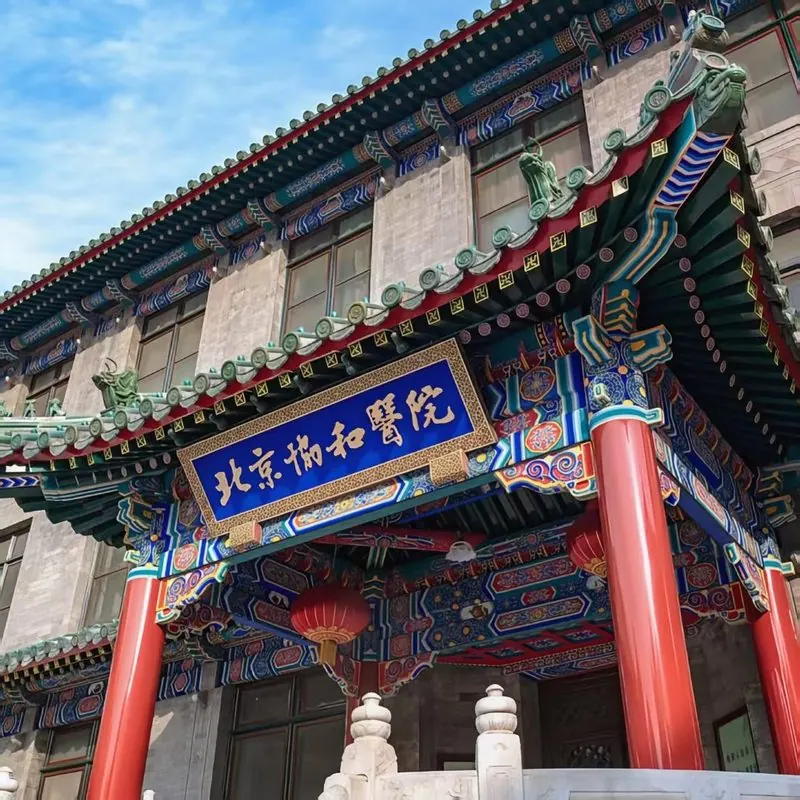
Peking Union Medical College Hospital
Ranked No. 1 in the Fudan University China Hospital Rankings for 13 consecutive years.
Peking Union Medical College Hospital opened in 1921, built and endowed by the Rockefeller Foundation as the teaching hospital of what became China's most selective medical school. A century later it is still the hospital other Chinese doctors send their difficult cases to, and the one the national health authority leans on when a diagnosis is genuinely unclear.
That history shapes what the hospital is good at. PUMCH is not the biggest — 2,000 beds is modest by Chinese standards — but it is the most concentrated: endocrinology, rheumatology, immunology, rare metabolic disease and undifferentiated internal medicine, where the answer is not obvious and the work is diagnostic rather than operative.
For international patients the practical consequence is that PUMCH is a second-opinion hospital more than a surgery hospital. If you arrive with a diagnosis and want an operation, you will usually be told which hospital does that operation at volume. If you arrive without a diagnosis, this is where the search tends to end.
Founded 1921 by the Rockefeller Foundation.
Best for
- A diagnosis that has not been reached elsewhere
- Complex endocrine, rheumatological or immunological disease
- A second opinion before committing to surgery
- Rare disease with an unclear pathway
Not the right choice for
- —High-volume elective joint replacement — other Beijing hospitals do more, faster
- —Cardiac surgery — Fuwai is the referral centre
- —Cases where the priority is speed over certainty
Departments we refer to most
- Department of Endocrinology
The department that effectively wrote Chinese endocrinology. Diabetes, thyroid, pituitary and adrenal disease, plus the metabolic conditions that other hospitals refer onward. - Department of Ultrasound Medicine
Chinese ultrasound medicine started here. Interventional and diagnostic ultrasound, including paediatric and obstetric work. - Department of Nuclear Medicine
PET-CT and radionuclide therapy, including thyroid cancer ablation. - Department of Rheumatology
Connective tissue disease, vasculitis and inflammatory arthritis, with the immunology lab on the same campus rather than outsourced. - Department of Gastroenterology
Diagnostic endoscopy at very high volume, and the hepatology backup for cases that turn out to be liver disease rather than gut disease.
Direct flight times to Beijing
Approximate non-stop durations. A coordinator books transfers from the airport to your hotel and to every appointment.
Practical notes
The international department runs a separate foreign-patient clinic with multilingual coordinators. Same-week specialist access is normal for referred cases; the bottleneck is usually records translation, not appointment availability.
The international department runs a separate foreign-patient clinic with multilingual coordinators. Same-week specialist access is normal for referred cases; the bottleneck is usually records translation, not appointment availability.
Key facts
| City | Beijing |
|---|---|
| Accreditation | Tier-3 public, national referral centre |
| Licensed beds | 2,000 |
| Annual surgeries | 73K |
| Annual outpatients | 4.9M |
| Languages supported | Chinese, English, Japanese, French, German, Russian, Korean |
| Official site | www.pumch.cn/index.html |
Our honest position
Cost guides for this hospital
What each condition costs here, and what the figure excludes.
Other hospitals in this city
Ready to start your health journey?
Send your records and tell us what you are trying to solve. A coordinator replies within one business day with a proposed hospital, a named specialist and a written cost range.